As part of the National Week Without Driving, please join me for a Transit Trek and Trip Audit.
What: A Transit Trek
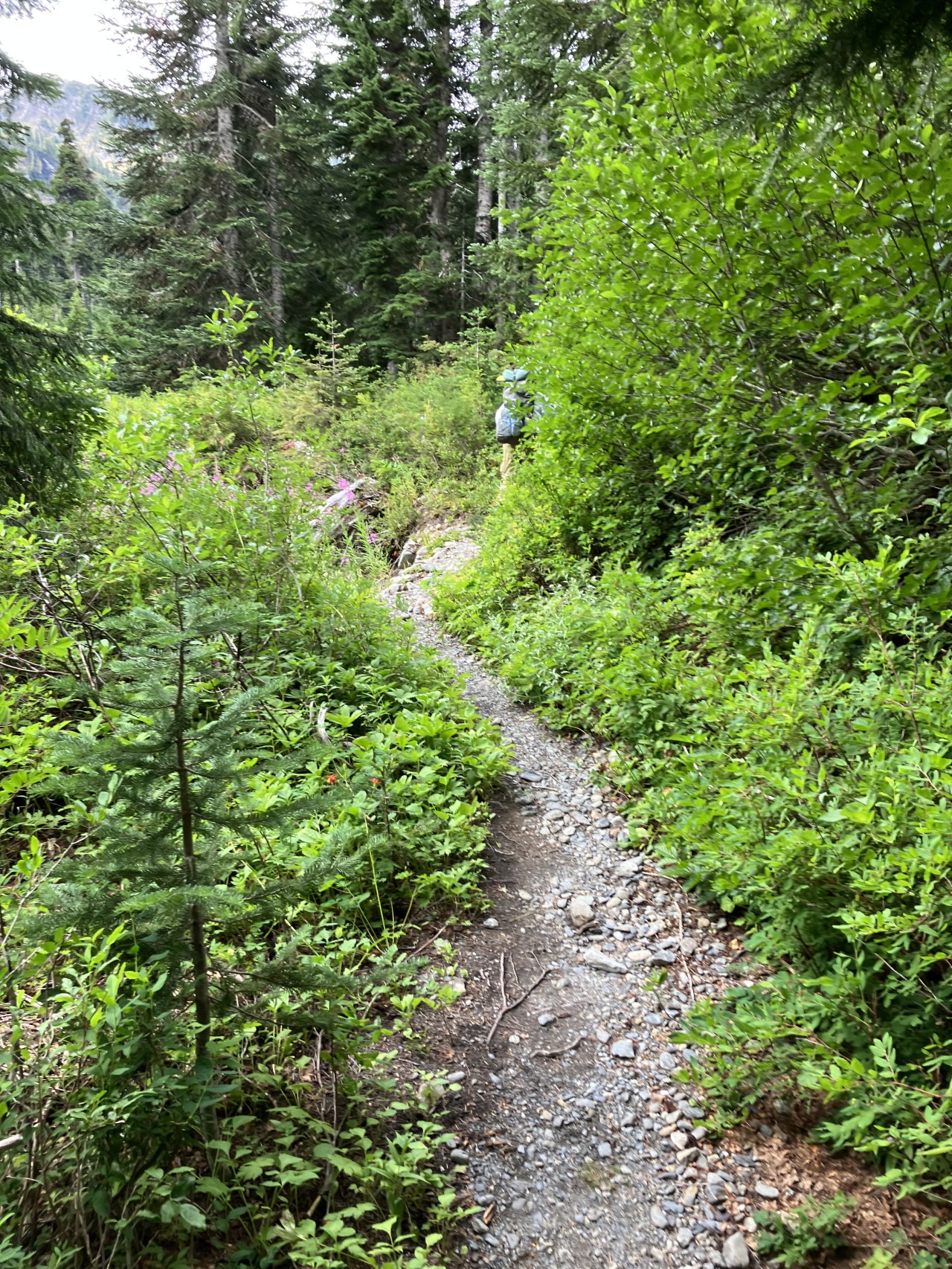
We’ll take the ferry to Bainbridge Island, catch a bus on Bainbridge and walk to the Grand Forest Trailhead to hike the Cross Island, Forest to Sky, and Battle Point trails, a total of about 4.7 miles. We’ll enjoy an easygoing hiking pace while also auditing our experience by noting the good, bad, and confounding about using transit for this recreational trip.
When: Saturday, October 7, 2023
Plan to catch the 9:35 a.m. ferry to Bainbridge at Colman Dock. Return to Seattle on the 2:10 p.m. ferry back to Seattle — or later if you want to mosey around town. This includes time to regroup in town and gather outdoors for an informal debrief over lunch. Additional info provided when you RSVP.
Why: It’s the National Week Without Driving
The goal of the National Week Without Driving is to highlight challenges faced by people who can’t drive or can’t afford to drive by asking people who can drive to go a week without driving themselves. Taking transit has its benefits, but also a lot of gaps, including when it comes to getting out for recreation. By auditing a recreation-based transit trip, we’ll be able to highlight the gaps in infrastructure and service that, if addressed, would improve recreation as well as everyday transit trips.
How: Hiking boots on the ground and notebooks and smartphones in hand
During our hike, we’ll chat about and document the experience — such as schedules, facilities, navigation, or safety — basically, anything of note related to getting to and from the Grand Forest and Battle Point Park without driving ourselves. I’ll compile our audit notes and photographs, publish a summary on the blog, and share the full audit with relevant agencies (parks, transit, transportation). We’ll also highlight where basic needs of transit-reliant people overlap with recreation needs, such as expanded weekend service and safe walk and roll routes. The goal is for this trip audit to demonstrate that people value investment in expanding bike, walk, and roll infrastructure and to put some of the barriers and needs on the public record.
Who: You
Info to help you decide if this is a trip you feel comfortable joining:
- Attending is free, but participants are responsible for their own transit fare, lunch, and so on. Please note when RSVPing if you need assistance with fare; I’ll see what I can do.
- I request that folks wear masks when we’re riding the bus together (about 10 minutes each way).
- We’ll go rain or shine, but extreme weather may cancel.
- The total one-way mileage is 4.7, including about 1 mile of walking on the side of a low-traffic road that has no sidewalk or real shoulder. Overall elevation gain is mild to minimal.
- Restrooms access at Colman Dock, on the ferry, at Bainbridge Island Terminal, at some Grand Forest trailheads, and at Battle Point Park.
I have an e-mail inquiry to Bainbridge Island Parks about whether there is any kind of portapotty or similar restroom access in the Grand Forest. - Kiddos: This trip should be manageable for kids who can walk up to five miles on their own and/or with caretaker assistance. After the first 3.5 miles, in Battle Point Park, playground options are nearby.
- Dogs: Kitsap Transit’s pet policy is “small animals inside enclosed pet carriers” only, so very small dogs may join this trip and are welcome; if anyone joining is uncomfortable with pups, I might ask dog walkers to walk a bit ahead of or behind the main group and to be extra mindful. The Grand Forests and Battle Point are both dog-friendly; leashes required. Ferry policy is here.
- Service dogs are always permitted on transit.
- Battle Point Park has some wheelchair accessible paths, but the Grand Forest trails are not wheelchair friendly. If you use a wheelchair and want to meet the group at Battle Point, please include a note in your RSVP. Then plan to meet the rest of the group at Battle Point Park at approximately 11:45 a.m.
- For deaf or hard of hearing participants, please note your access needs in the RSVP form. While I don’t have the budget to hire an interpreter, I will do my best to work with you to find a good alternative.
- Bicycles aren’t allowed on the Grand Forest trails or Forest to Sky trail as far as I can tell, so if you prefer to meet us via bike, you’ll need to figure out how to secure your bike near the trailhead. Or, you can meet us at Battle Point Park.
B.I. Rides
I will request that Kitsap Transit’s B.I. Rides (a quasi-on-demand service) pick up the first five RSVPS at Battle Point to go back into town. (Why B.I. Rides? Because fixed-route transit doesn’t serve Battle Point on the weekend.) The limit I can request is for six people. If more than five folks RSVP, I’ll look into a shared cab back to town. If you are up for the return hike and are willing to catch up with us back in town, that works, too!
What to Bring
- ORCA card or cash for fare
- Dress for weather. We’ll go rain or shine, but extreme weather may cancel.
- A mask to wear on our two short bus rides
- Snacks and water (water fountains at both ferry terminals, on the ferry, and at Battle Point)
- A sack lunch if you don’t want to purchase one in town
Handy Links
- WSDOT Bainbridge Island Ferry Schedule
- Kitsap Transit Route 390 (scroll down for Saturday schedule)
- Kitsap Transit BI Ride Info
- Map of Grand Forest Trails
- Map of Battle Point Park
Transit stops near Colman Dock include
- Metro route 12 stops at 2d and Marion; from there cross 1st and follow the pedestrian walkway to the terminal
- Rapid Ride Line C and Line H and Metro route 21 and route 125 stop at Alaskan Way and Columbia St. Other routes serving this stop don’t run on weekends.
- Link Light Rail: University St or Pioneer Sq

 Transit Trekker