A dark brown cat sniffs a promotional pin for Trailhead Direct's Mt. Si route that is sitting on a topographic map of the Mt. Si trailhead. But her head obscures the actual trailhead.

Trailhead Direct and Hurricane Ridge Season is Almost Here

These two seasonal shuttle services start May 24, 2025

The weekend of May 24 kicks off the annual start of at least two seasonal shuttles in the Salish Sea region designed with hikers in mind. Both run through September 1.

Trailhead Direct

Trailhead Direct wooshes citydwellers from a few key light rail stops including (NEW this year) S. Bellevue Station and Eastgate Park & Ride directly to at least seven trailheads in the Issaquah Alps, Cougar, Squak and Tiger Mountain area. If you’re willing to walk short distances, it’s also easy to discover several other trailheads that this weekend & holiday service will open up to car-free hikers. Right now I’m keeping my fingers crossed that earlier routes like Mailbox Peak will finally return after a pandemic-induced driver shortage, which would open up some pretty incredible car-free backpacking opportunities.

Cost

Standard Metro fare ($2.75 ish); use an ORCA card, exact change in cash, or whatever other fare payment options Metro currently offers (there are too many to keep track of these days).

Hurricane Ridge Shuttle

The Hurricane Ridge shuttle makes my heart sing because it offers daily service, not just weekend and holiday service, showing once again that smaller cities and less-resourced counties can and are lapping Seattle and King County — hey, I love them, I live in them, but I also love to see underdogs doing things better. The shuttle runs several times a day from Port Angeles up to Hurricane Ridge, has capacity for two or three bikes (call the agency to confirm), and puts some epic hiking in Olympic National Park (ONP) into reach for car-free folks.

Pro-tip for bikepackers from the Seattle area: Take the early run of the Clallam Transit Strait Shot from the Bainbridge Ferry Terminal to Gateway Transit Center Ferry Terminal in Port Angeles. From there, hop on the Hurricane Ridge Shuttle to deliver you to your chosen trailhead.

Cost

You must purchase an entrance pass to ONP before boarding, then pay up to $1 in Clallam Transit fare. The Clallam Transit link above helpfully provides more details and links on purchasing ONP passes.

Sign Up & Support

Support Transit Trekker here. And Sign up to get notified when The Transit Trekker Manual: Washington State is available.

Header image My cat’s head obscures the Mt. Si Trailhead on my Rattlesnake Mountain region topographic map, next to which I’ve placed a Trailhead Direct pin featuring the Mt. Si route.
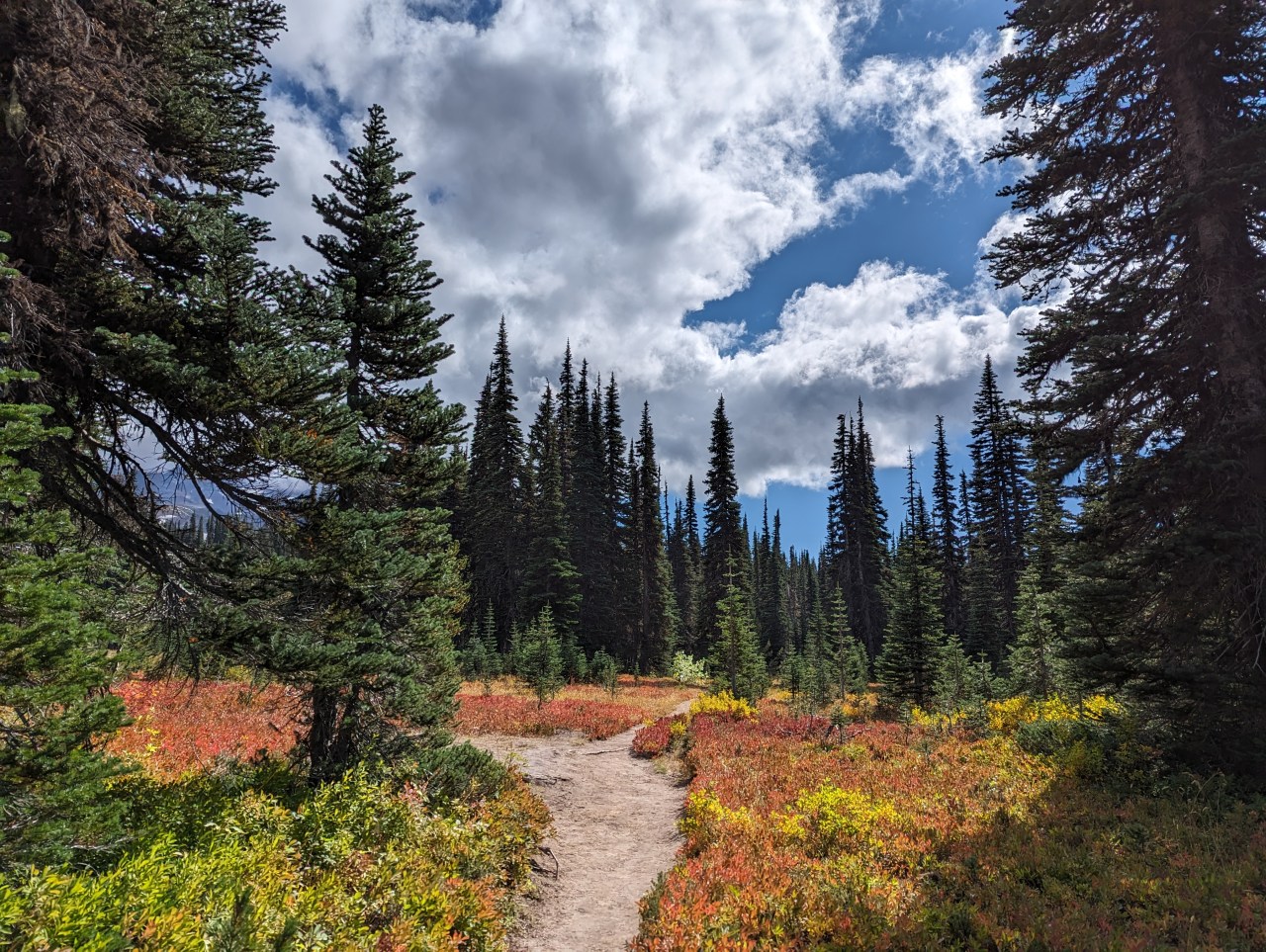
A trail bordered immediately by low shrubs, possibly wild blueberry bushes, which are in turn bounded by tall conifers in every direction. The blue sky above is dominated by puffy clouds.

Car-free to Mt. Rainier

I thought I’d be writing a no-frills post about the only service I’ve (finally!) found to date that serves overnight adventurers to Mt. Rainier National Park. But my discovery came with a bonus: connecting with a fellow traveler and nature lover who is also clamoring for public transit access to the outdoors.

“I’m a one-guy operation who loves the mountains and likes people,” John McLarty tells me. “But I keep dreaming of being part of something bigger than me and my car…It is inexcusable that you can’t get to Mt. Rainier [by bus].”

A trail runner, one of the first things he says on our call is that “In a perfect world I’d run for 20-30 miles from one place to another and hop on a bus [to get back]. If I want this, there’s got to be other people.” So, the Enumclaw-based retiree — also a poet, former editor, and geology enthusiast — launched Talking Rocks Trailhead Shuttle service in 2022.

That first year, he booked three shuttle trips. He figured he’d double his trips to six in 2023; he booked 25. As I write in March 2024, he’s already getting inquiries and booking reservations for the summer.

The base price is $1.11 per mile plus $29 per hour, and $20 per additional person; these are calculated from Enumclaw, so if you take transit to Enumclaw, you’ll knock a chunk off the price tag.

I’m outlining some basic details below; see the Talking Rocks website for more.

  • Six-passenger capacity in his primary shuttle vehicle, a Mitsubishi SUV
  • Two bikes, in same. He can haul more in the bed of his secondary vehicle, a pick-up truck with room for five passengers.
  • For adventurous families with younger kids, he can install one or two car seats he keeps on hand for visits from his out-of-state grandkids

McLarty encourages travelers to book specific service as far in advance as possible; he does offer “emergency” service. It’s not the 911 kind of emergency, but the “things are not going as we planned and we need a lift” kind of emergency. About 20 percent of his trips in 2023 were from parties that needed to be bailed out of trips that went awry.

An older white man with salt and pepper hair and a beard, smiling. In the background is a forest in winter, with fairly deep snow in the background.
John McLarty

McLarty is keenly aware that his rates aren’t readily affordable for everyone. Another of his stated dreams is to reduce the per-person cost of his services. One first step was to post information about future reservations so that hikers might be able to share the ride with others. You can check the Talking Rocks website or Facebook page to see scheduled trips that, with the consent of the confirmed hikers, you might be able to join. (McLarty is gracious and responsive: I suggested he post confirmed reservations on his site for those who don’t have Facebook accounts; he added the Scheduled Trips tab to his site within 24 hours of our conversation.) One way he’s thinking about being part of “something bigger” is by looking for other drivers — not to hire them but to facilitate additional shuttle service by linking drivers up with potential passengers — which could potentially mean lower prices.

For some travelers, Talking Rocks is a (comparative) bargain. Last year after warning a pair of inquiring hikers about his rates, the duo booked their trip through McLarty after comparing the cost of a car rental for their planned adventures.

In recent years McLarty has hosted several geology tours in the Southwest U.S., and is available for other tours. He plans to organize some 1- or 2-day geology tours in the Enumclaw-Mt. Rainier area this year, and is available for custom tours and transportation to other hiking and outdoor destinations in the Rainier region.

I suspect that public transit to Mt. Rainier would increase demand for private shuttle services. The option would be attractive for folks like me who can’t drive to take transit at the start of a longer backpacking trip and then spend some money to have a quicker, less logistically challenging trip back home than transit can offer. There are probably a lot of other use cases I’m not considering. But another of McLarty’s dreams is this one: “That my service would go out of business because it gets supplanted by scheduled service — public transit.”

Image: A trail in or near Mt. Rainier National Park, courtesy John McLarty